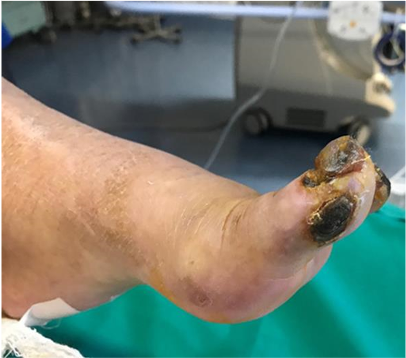
Revascularization of Critical Limb Ischemia
86-year-old female with non-healing ischemic ulcers on toes at risk of amputation (Rutherford Category 6)
See Case Study
Welcome to the AngioSafe Education Center—your destination for clinical insights, real-world experience, and expert perspectives on complex cardiovascular interventions. Explore an expanding library of case studies, physician presentations, publications, and educational resources that showcase innovative approaches to peripheral artery disease (PAD) treatment and revascularization.
86-year-old female with non-healing ischemic ulcers on toes at risk of amputation (Rutherford Category 6)
See Case Study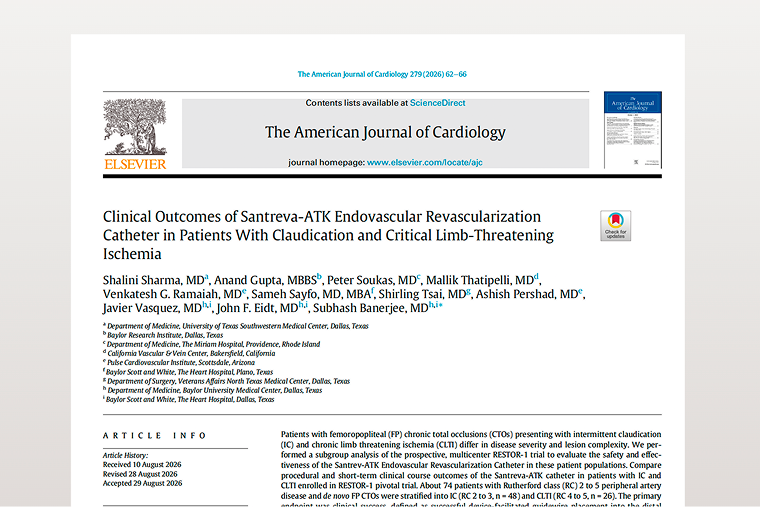
How does the Santreva-ATK Endovascular Revascularization Catheter perform across different patient populations? A dedicated subgroup analysis of the RESTOR-1 study evaluated outcomes in patients with intermittent claudication (IC) and chronic limb-threatening ischemia (CLTI). The findings demonstrated consistent procedural success across both cohorts – 89.6% in IC and 84.6% in CLTI – with no device-related major adverse events reported. Explore the results and learn more about the role of Santreva-ATK in simplifying complex femoropopliteal revascularization.
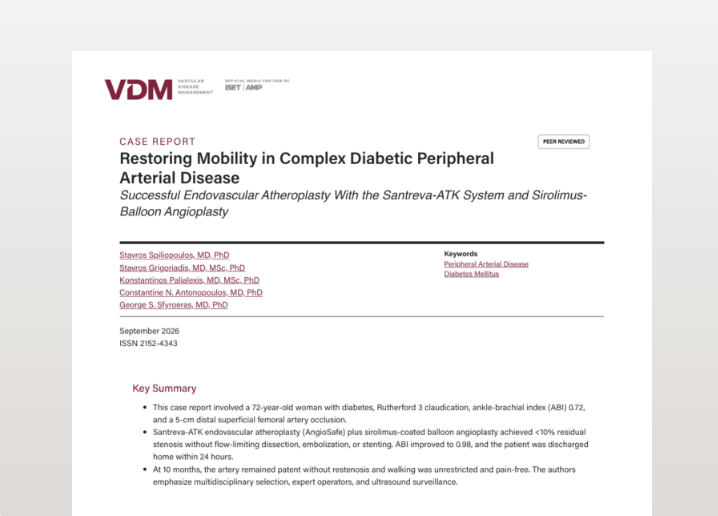
How do we tackle long-standing, lifestyle-limiting intermittent claudication when diabetes complicates the vascular landscape? Dive into this real-world case report co-authored by Dr. Stavros Spiliopoulos.
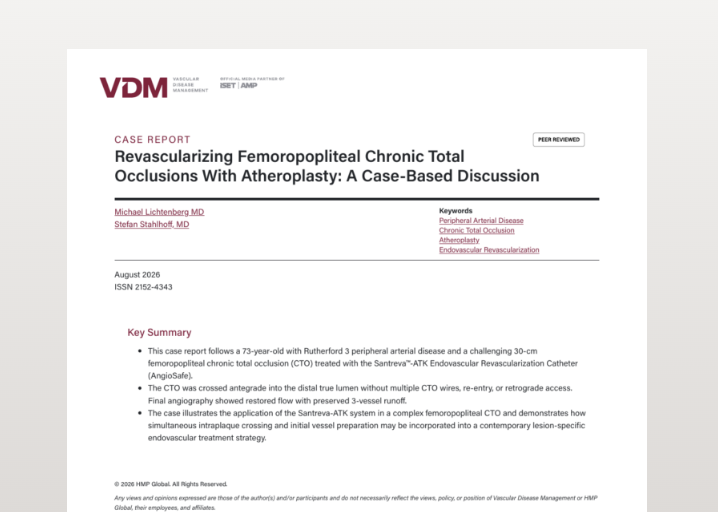
How can a lesion-specific atheroplasty approach reduce procedural times and minimize vessel trauma? Read the article in Vascular Disease Management by Dr. Michael Lichtenberg featuring the Santreva-ATK Endovascular Revascularization Catheter in action.
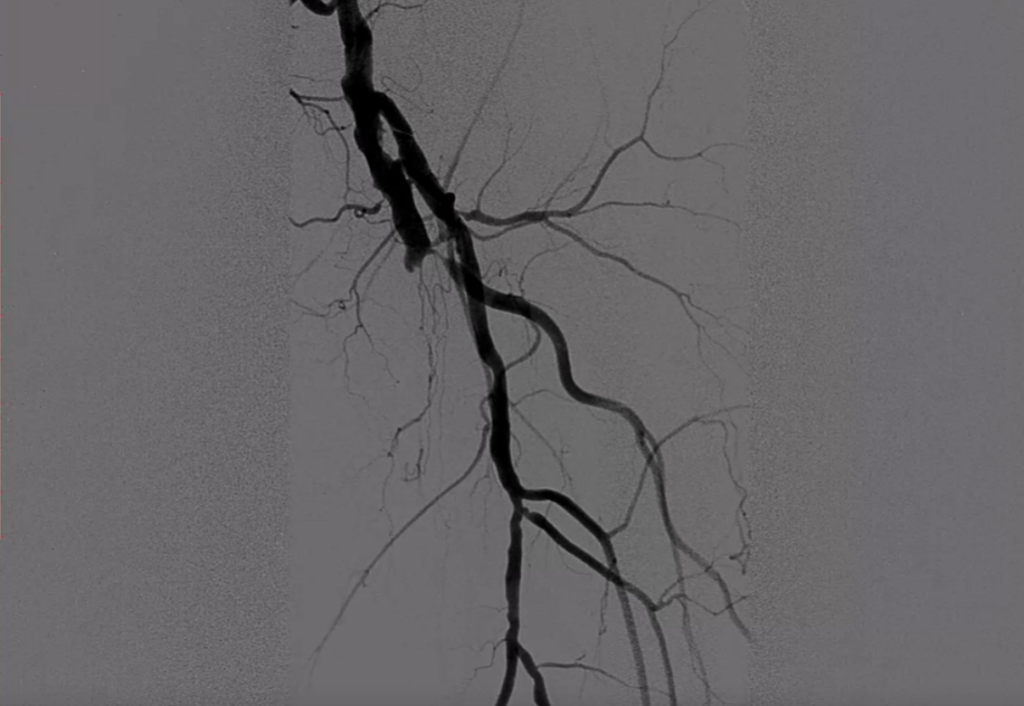
63-year-old Caucasian male with life style limiting claudication (Rutherford Category 3)
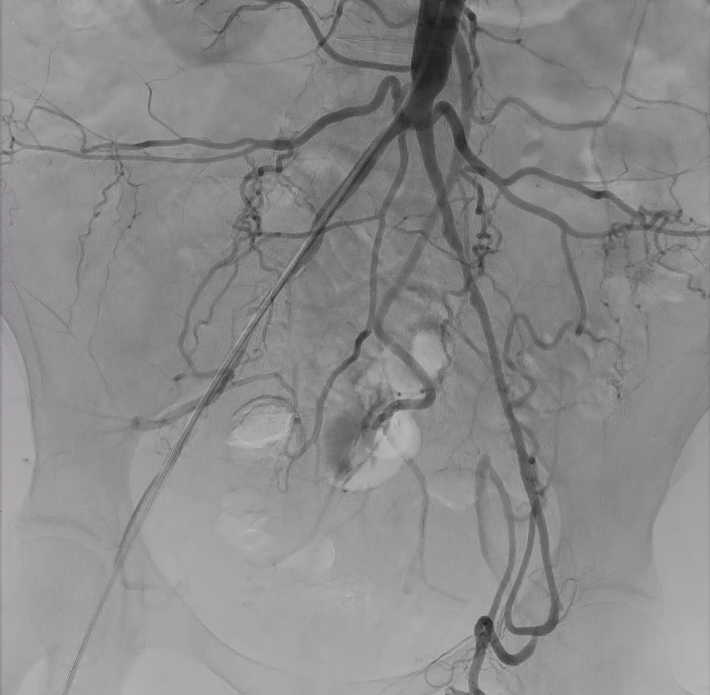
51-year-old female, current heavy smoker
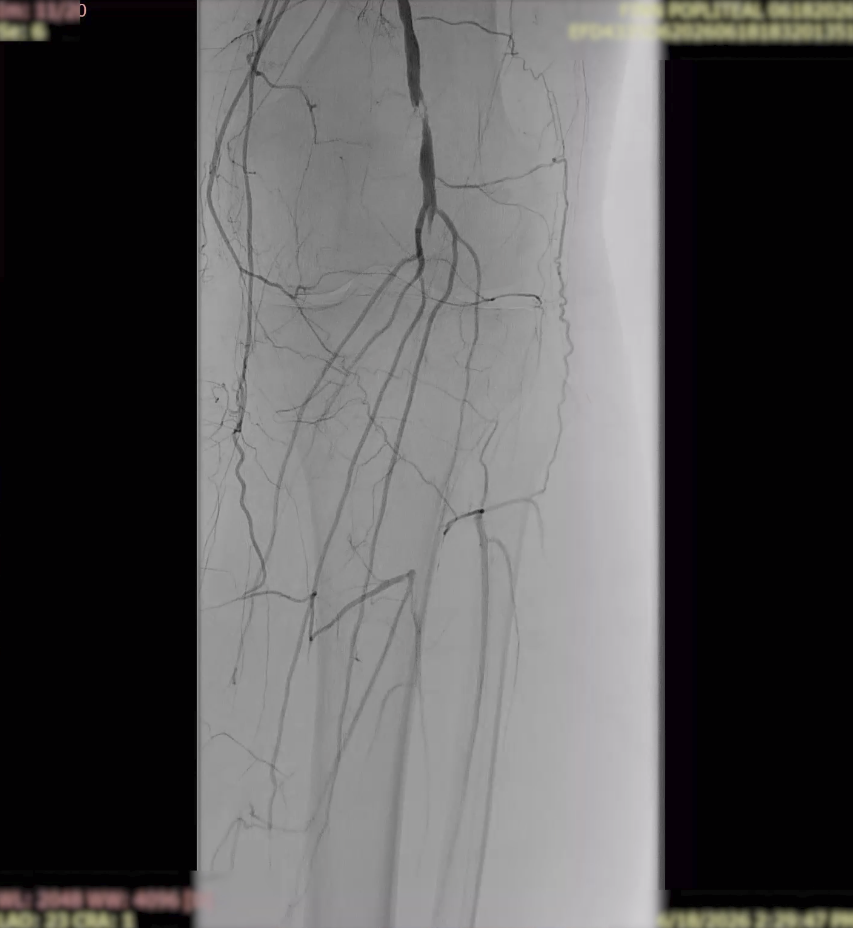
58-year-old female with multiple prior rounds of restenosis
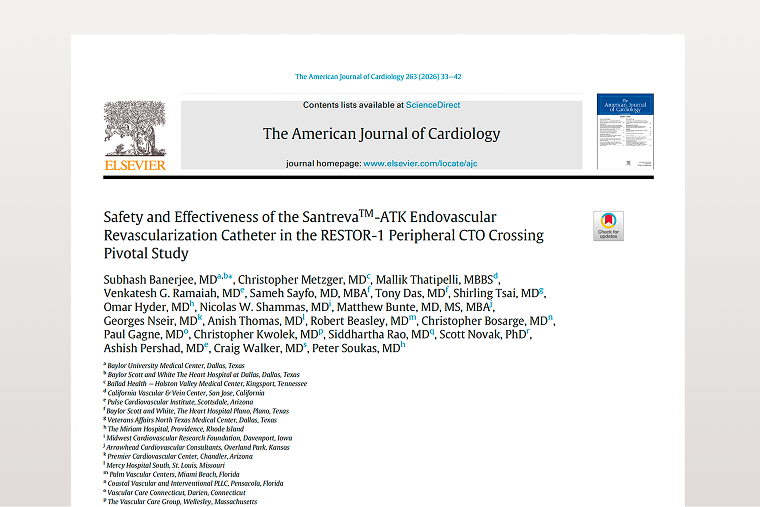
Discover the breakthrough data behind the RESTOR-1 pivotal trial. This landmark publication evaluates the Santreva-ATK Endovascular Revascularization Catheter across 74 patients with femoropopliteal chronic total occlusions. Learn how the device achieved an 87.8% clinical success rate – even in heavily calcified lesions – with 0 device-related major adverse events through 30 days. Read the full study to explore how intravascular ultrasound (IVUS) confirmed predominantly true-lumen crossing and significant luminal gain.