
Treating Bilateral Multilevel Superficial Femoral Artery (SFA) Occlusions with the Santreva-ATK Endovascular Revascularization Catheter
51-year-old female, current heavy smoker
Case courtesy of Dr. Finn

Dr. Matthew Finn
Dr. Matthew Finn, MD, MSc is an interventional cardiologist at the Cardiovascular Institute of the South (CIS) in Houma, Louisiana, specializing in diagnosing and treating cardiovascular and vascular conditions, especially peripheral artery disease in the legs.
Patient History
- 51-year-old female, current heavy smoker
- Rutherford category 4 with rest pain in both legs
- Duplex ultrasound positive for bilateral common femoral artery (CFA) disease and long segment bilateral SFA occlusions
- SFA vessel diameter ~4mm, therefore plan is to avoid stenting altogether
Case 1: Procedural Information
Planned to treat the bilateral disease in two separate procedures. The first case addressed the left SFA disease and the second case addressed the right SFA disease. Due to the small SFA vessel diameter (~4mm), planned to avoid stenting altogether.
Initial angiography shows significant in-flow disease which was treated.
Left external iliac artery occluded with reconstitution in the common femoral artery.
Long segment second chronic total occlusion (CTO) in the SFA with reconstitution in the distal SFA.
The left external iliac and common femoral arteries were revascularized and the SFA was accessed with the device.
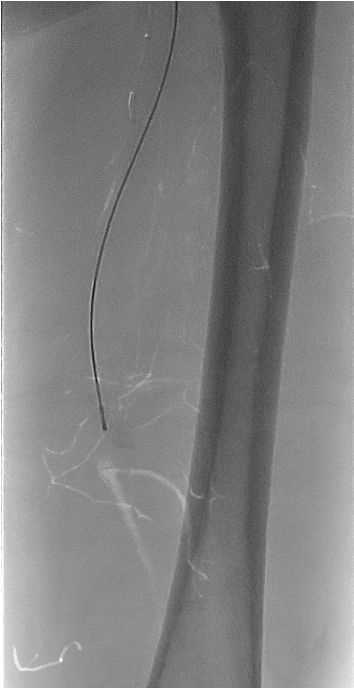
The Santreva-ATK Revascularization Catheter penetrated the proximal cap and atheroplasty of the SFA CTO was completed rapidly.
A channel was formed with the device and no additional intervention (laser, etc.) was necessary.
Final Result - Case 1
Percutaneous transluminal angioplasty (PTA) was utilized for a "stent-like" result without using stents, as originally planned, given the small vessel diameter.
Below the knee run-off appeared patent as well.
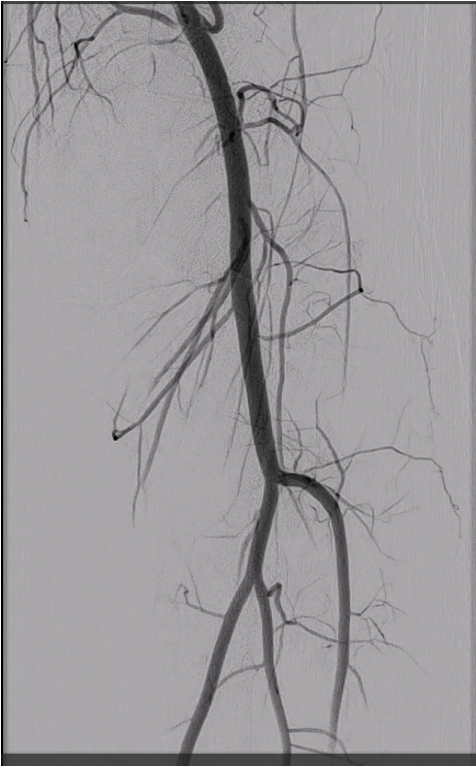
No Distal Embolization. No Flow-limiting Dissection. No Major Perforation.
Case 2: Procedural Information
The patient was brought back at a later date to address the peripheral artery disease in her right leg.
Procedural imaging showed the right leg disease to be just as severe as the left leg with an SFA CTO and another CTO with severe calcification from the distal SFA to the popliteal artery.
Santreva-ATK Revascularization Catheter easily penetrated and navigated the CTO.
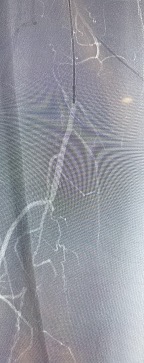
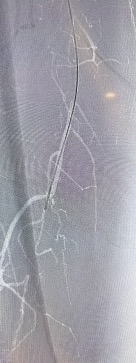
Channel post Santreva-ATK shows restored flow.
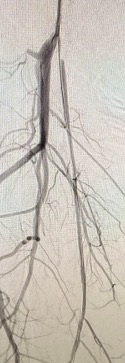
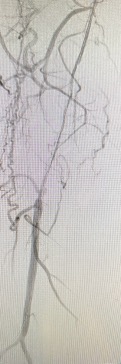
Final Result - Case 2
Final result after PTA shows a "stent-like" result without stenting, once again, with patent vessels.
No Distal Embolization. No Flow-limiting Dissection. No Major Perforation.
A New Era in Endovascular Revascularization
Santreva-ATK is an all-in-one, large-profile, manually controlled, and guidewire-free endovascular revascularization solution for complex femoropopliteal disease, with full force range and control to tackle the wide range of plaque morphologies, designed to limit damage to the vessel wall.