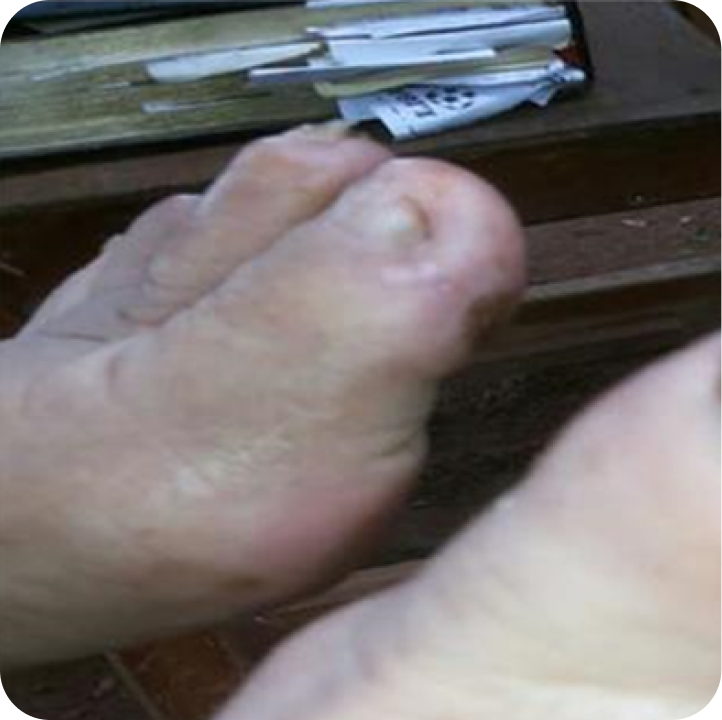
Atheroplasty - Proof of Mechanism, First in Human
Revascularization of Critical Limb Ischemia
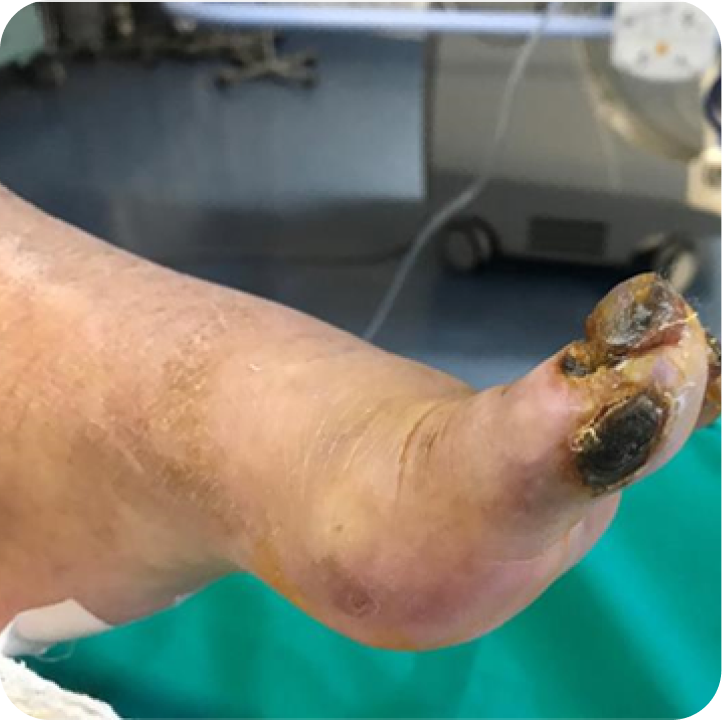
86-year-old female with non-healing ischemic ulcers on toes at risk of amputation (Rutherford Category 6)
Case courtesy of Drs. Ebner and Ramaiah

Professor Adrian Ebner
Professor Adrian Ebner, based in Paraguay, is the Head of the Cardiovascular Department at Sanatorio Italiano, Asuncion, Paraguay.
Dr. Venkatesh Ramaiah
Dr. Venkatesh Ramaiah was formerly the Chief of Complex Vascular Services for the HonorHealth hospital system. He is the founder of Pulse Cardiovascular Institute, the first cardiovascular outpatient surgery center in Scottsdale, Arizona.
Patient History
86-year-old female with a history of hypertension, coronary artery disease, non-diabetic, and non-smoker
- Rest pain for several months with non-healing ischemic ulcers on toes
- Very poor distal runoff
Procedural Information
Mid Superficial Femoral Artery (SFA) Chronic Total Occlusion (CTO)
CTO Length
140mm
Atheroplasty was used in an antegrade intraluminal crossing approach.
Crossing Time
10 min
Revascularization post Atheroplasty
Mid Superficial Femoral Artery (SFA) Chronic Total Occlusion (CTO)
IVUS showing intraluminal SFA crossing and 68% lumen gain, no loose plaque, and no distal vessel embolism
Final Result
Final angiogram post PTA and SFA stenting with improved flow
Quality of Life Improved
6 months post procedure
Ischemic ulcers healed, no amputation, no complaints of pain, and patient was able to walk again